I build applications, APIs, cloud systems and AI-enabled software — TypeScript, Python and PostgreSQL — and I test them like it matters. Twenty-one years leading technical teams in safety-critical aviation taught me that discipline; the deliverable is now code.

Deployed, tested, and open to inspection. Every claim below has a link behind it.
Live · source public · Stripe sandbox, no real funds move
A payments platform built end to end and running in production: hosted Stripe checkout, signature-verified webhooks, an auditable PostgreSQL ledger, refunds under a four-eyes rule, and an operations console.
Try it: zerofayyz-fintech.vercel.app — click through in three minutes, everything is sandbox and safe to touch · source and thirteen decision records
Built for your company, if you need one: this is commissioned work as well as a portfolio piece — your provider, your ledger rules, your audit and compliance requirements. What carries over is the engineering above, not the branding: idempotency enforced by a database constraint rather than application branching, an append-only audit log the application itself cannot rewrite, refunds that move the ledger only on a signed provider event, and an independent reconciler. Scope and price depend on what you already have, and you will get a straight answer about whether it is a good fit. Ask what it would take →
Built solo · private repository
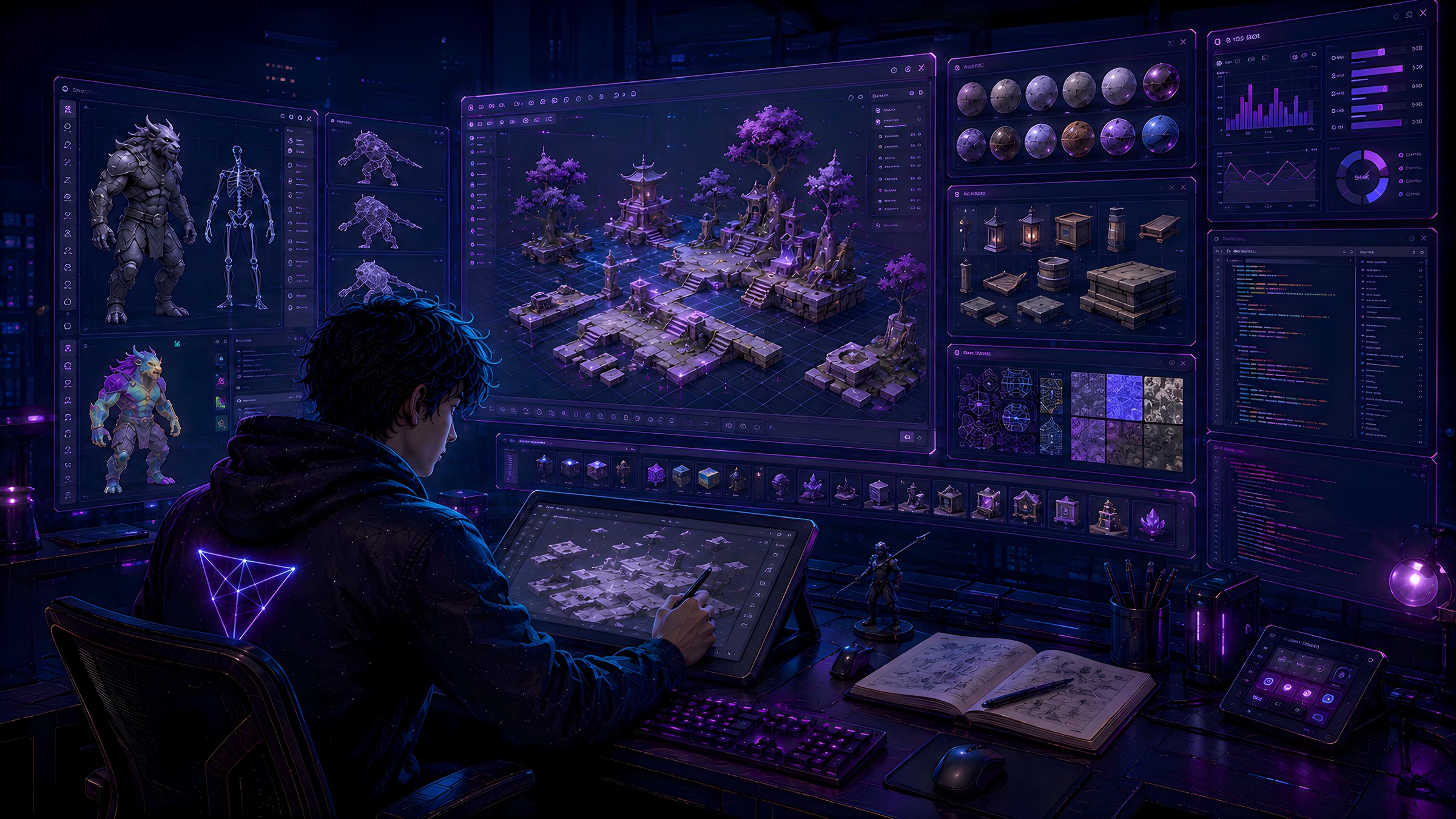
A single React interface over conversational AI, local image generation, image-to-3D mesh conversion, voice synthesis, an animation studio, Blender and Unity integration, and a system-health lane that can inspect and repair the machine it runs on.
Python · MIT · open source
A two-phase fair scan over a grouped document corpus, where group order never decides the result. Extracted from Gabriel's retrieval layer after I found a defect that made search answer confidently from the wrong source — no error, no empty result, just wrong, with a whole category of documents quietly unreachable.
The repository keeps the original broken implementation next to the fix and runs both on the same corpus, so you can watch it fail and then pass. Ten hermetic tests, zero dependencies, CI on three Python versions · github.com/marcelgilbertdev-oss/fair-scan
Written because they did not exist and I needed them. No signup, no email gate, no upsell — read them, share them, feed them to your AI.
Delivered from this site — downloads and reference works, free or paid. Nothing is listed until it exists and works: no pre-orders, and no launch dates that cannot be kept.
Sold through the engine marketplaces rather than here, so that licensing, VAT and per-country tax are handled by the store a buyer already has an account with. This page will link straight to each listing when it is live.
Where these will be sold: the Unreal plugin and the asset packs on Fab, the Unity package on the Unity Asset Store, and the Blender add-on on Superhive. Nothing is listed yet, and there is no link above for that reason — this section exists so the route is obvious when there is, not to announce a date.

The same engineering applied to content pipelines. Tooling exists here because doing the work by hand did not scale — which is the reason to write any tool.
Blender · Python (bpy) · Unity · Unreal
Character rigging and skinning including retargeting onto an existing skeleton, named animation sets, LOD generation and export prep — automated with Blender Python I wrote, including a repeatable rig-transplant procedure that retargets a validated armature onto new meshes.
Why the engine check matters: FBX export can silently corrupt IK bones, and Blender's own importer will re-open the broken file looking correct. So every rig now ships with a parity test that runs in the target engine. That is the difference between an asset and an asset that works — and it is the same instinct as the integration test that caught the webhook bug above.
Image · image-to-3D · video · voice
Local SDXL and FLUX image generation, image-to-3D mesh conversion, local video models and TTS voice synthesis, assembled through an ffmpeg pipeline into finished animated shorts. Model selection is most of the craft: the same prompt gives a usable shot on one model and garbage on another.
Public proof: the model-by-model prompting reference on this site is mine — around fifteen image and video models compared side by side, free and open. It is the working knowledge behind the production work.
Email reaches a person, not a queue, and you will get a straight answer about whether something is a good fit — including when it is not.
Whether you are: